






 by Tom Brammer, Senior Manager – AI and Machine Learning US Team
Analytics teams support value creation in growth-stage portfolio companies by improving revenue quality, margins, cash flow, and decision discipline. For private equity and venture capital firms operating in a higher-interest, lower-multiple environment, analytics is now a core input into value creation planning rather than a supporting capability.
This article explains where analytics contributes most directly to commercial outcomes, why progress often stalls, and how operating models and talent choices influence results.
On this page:
-
- Why analytics matters now for private equity portfolios
- What value creation through analytics looks like in practice
- How AI and analytics operating models affect portfolio-level value
- Why analytics initiatives stall in portfolio companies
- How stronger analytics teams overcome these issues
- How to structure analytics teams for value creation
- What this means for operating partners and investors
Why analytics matters now for private equity portfolios
Value creation has shifted inward. Longer hold periods, higher financing costs, and closer scrutiny of forecasts mean performance must be supported by stronger internal controls and clearer visibility into how the business operates.
Recent survey data underscores the pressure. In the North America Value Creation in Private Equity Report 2025 from Alvarez & Marsal, only 31% of respondents reported a positive outlook on deal activity over the next 12 months. 72% realized less than 75% of planned value, and 55% are now investing in value creation initiatives more than one year into the hold cycle.
In this environment, analytics is increasingly used to:
- Improve confidence in revenue and margin forecasts
- Identify operational inefficiencies earlier
- Support pricing, cost, and working capital decisions
- Strengthen exit narratives with evidence rather than assumption
Across private equity research, a consistent pattern emerges: analytics contributes most when ownership is clear, priorities are commercially defined, and teams are positioned close to the decisions that affect revenue, cost, and cash flow.
What value creation through analytics looks like in practice
Revenue quality and pricing discipline
Analytics supports revenue performance by improving the quality and consistency of commercial decisions, rather than driving volume alone. In PE-backed businesses, this most often shows up in areas such as:
- Customer and product segmentation
- Pricing visibility and discount governance
- Regional or channel-level sales performance analysis
Where analytics capability is positioned close to commercial leadership, these approaches help reduce decision variability and support more disciplined margin management over the hold period.
Cost and margin control
Operational analytics often contributes early to margin improvement because it focuses on reducing variability rather than changing behavior at scale. Typical use cases include:
- Predictive maintenance in asset-heavy environments
- Demand and capacity forecasting
- Automation of repeatable finance and operational processes
These initiatives tend to be tied to clearly defined cost drivers, which makes outcomes easier to track and manage.
Working capital efficiency
For capital-intensive portfolio companies, analytics frequently delivers value through improved cash management. Common use cases include:
- Inventory optimization
- Forecasting accuracy improvements
- Reductions in excess stock or expedited procurement
These initiatives tend to be easier to govern and measure than broader transformation programs because they are directly linked to cash flow and operational efficiency.
Data monetization, where appropriate
Data monetization is not relevant to every portfolio company. Where it does apply, it typically follows earlier investment in data quality and operational analytics. Examples include:
- Benchmarking products
- Embedded customer insight services
- Data-led product extensions
This type of value creation tends to emerge later, once core reporting and decision support are stable.
How AI and analytics operating models affect portfolio-level value
For operating partners and private equity leadership, one of the most consequential analytics decisions is not technical but structural: who owns analytics, and at what level.
Research from FTI Consulting identifies four common operating models, defined by the degree of centralization across the portfolio:
- Decentralized: each portfolio company owns analytics independently
- Center of Excellence (CoE): one or more portfolio companies act as capability hubs
- Fund-specific: shared analytics capability across a subset of assets
- Centralized: firm-level ownership of policy, priorities, and platforms
Portfolio-level value creation depends on how effectively knowledge, talent, and repeatable use cases can be shared across assets. Firms that move incrementally toward greater centralization, particularly around policy, prioritization, and architecture, are better positioned to reuse what works, rather than rebuilding analytics capability asset by asset.
Why analytics initiatives stall in portfolio companies
Many PE firms are asking, “What’s the right way to use AI in value creation?”
It’s one of the most controversial questions in private equity. Not because AI lacks potential, but because too many initiatives start with use cases rather than readiness. More often, it is timing, leadership, and alignment with the value creation plan.
Common constraints include:
- Fragmented systems and inconsistent data definitions
- Legacy infrastructure that limits integration
- Teams positioned too far from commercial decision-makers
- Lack of senior ownership for outcomes
As Gavin Geminder, Global Head of Private Equity at KPMG, notes:
“Having clear, ethical AI guidelines in place is going to build employee trust and customer satisfaction, while also enhancing GPs’ brands.”
In FTI Consulting’s AI Radar for Private Equity 2025, 36% of PE firms with an AI strategy reported having no specific milestones or KPIs to measure impact on value creation. Without clear ownership, success measures, or prioritization discipline, initiatives tend to accumulate as pilots rather than translate into sustained operational change.
How stronger analytics teams overcome these issues
High-performing portfolio companies take a deliberate, value-led approach.
Focus on defined, near-term use cases
Initiatives are selected based on expected commercial impact within the first 6–12 months, aligned to the investment thesis.
Embed analytics into commercial and operational teams
Analytics works alongside sales, operations, and finance, with shared accountability for outcomes rather than downstream reporting.
Align management, operating partners, and investors
Priorities are reviewed regularly to ensure analytics remain tied to the value creation plan as the business scales or changes direction.
How to structure analytics teams for value creation
Team structure and leadership choices play a significant role in whether analytics contributes to value creation.
In growth-stage portfolio companies:
- Analytics leadership often reports into the CFO or COO initially
- As scope increases, responsibility may move to a dedicated Head of Analytics or Chief Data Officer with board-level exposure
Sequencing matters more than team size. In many cases:
- A commercially credible analytics lead is hired first
- Data engineering capability is added to improve reliability and scale
- Applied data science is introduced where specific use cases justify it
Hiring technical depth without sufficient commercial context is a common cause of slow progress. Many PE-backed businesses use market benchmarks, such as Harnham’s Data & AI Hiring Guide, to sense-check seniority, expectations, and retention risk through the hold period.
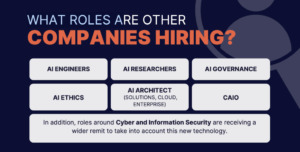
Source: Harnham’s How to Hire in AI
What this means for operating partners and investors
Analytics should be treated as part of the value creation plan, instead of a standalone capability.
Useful questions to ask portfolio leadership teams include:
- Which commercial decisions does analytics directly support?
- Who is accountable for outcomes, not just reporting?
- How does analytics align with the investment thesis and exit plan?
When these questions are addressed early, analytics is more likely to support sustained performance improvement.
Analytics value creation quick reference
| Value lever | Typical analytics focus | Early signal |
| Revenue quality | Pricing visibility, customer segmentation | Reduced discount variance |
| Cost and margin | Predictive maintenance, process automation | More stable cost forecasts |
| Working capital | Demand and inventory forecasting | Lower excess stock |
| Decision discipline | Analytics embedded in commercial workflows | Faster, more consistent decisions |
| Exit readiness | Forecast accuracy and performance evidence | Fewer diligence adjustments |
How Harnham supports analytics-driven value creation
Across private equity portfolios, the real challenge is how teams are structured, led, and scaled in line with the value creation plan.
Harnham supports private equity and venture capital firms by helping define analytics leadership requirements, assess team structure, and benchmark roles as portfolio needs evolve. Our work focuses on hiring decisions that support commercial priorities, operating discipline, and long-term exit readiness.
For firms reviewing analytics leadership or team structure across portfolios, you can explore Harnham’s analytics hiring capabilities here or get in touch for a market-led discussion.